

The Design/Build Advantage for Patios and Decks: Why Continuity Prevents Costly Mistakes
Most homeowners planning a patio or deck project spend the bulk of their energy on what they want built. The material choices, the layout, the features. That part is exciting, and it should be. But the decision that has the most influence over how the project actually turns out isn’t what you build. It’s how you structure who builds it.
The way a project is organized determines who’s accountable, how problems get solved, and whether the finished space reflects the vision you started with. Getting that structure right from the beginning is what separates a smooth, well-executed project from one that costs more, takes longer, and delivers less than you expected.
What Makes a Patio or Deck Project More Complex Than It Looks
Patios and decks tend to look straightforward from the outside. You’ve seen the finished versions in portfolios and on social media. They look clean, considered, and achievable. What those images don’t show is everything that had to go right below the surface to get there.
Every patio or deck project in Denver involves a real set of structural and site-specific decisions: grading and drainage, load-bearing requirements, utility conflicts, and permit compliance with local codes. Material choices carry more weight here than in milder climates. Pavers, composite decking, natural stone, and hardwood all perform differently under Denver’s freeze-thaw cycles, intense UV exposure, and clay-heavy soils. A material that holds up beautifully in another part of the country may not last a full Colorado winter without the right installation approach behind it.
Then there’s the ground itself. You don’t know what’s under a site until you start digging. Drainage issues, soil conditions, and subsurface surprises are common on Front Range properties, and they have real implications for design, timeline, and cost. The complexity isn’t a reason to hesitate. It’s a reason to be thoughtful about how you structure the project and who you trust to manage it.
The Traditional Model: How Design and Build Get Separated
The most common approach to a patio or deck project follows a familiar sequence. A homeowner hires a designer to produce plans, then takes those plans to contractors for competitive bids. It feels like a logical way to control costs and compare options. In practice, it creates a structural gap that most homeowners don’t notice until they’re in the middle of it.
Here’s what that gap looks like in practice:
- 1. The designer creates plans based on a series of conversations with the homeowner, capturing decisions but not always the reasoning behind them.
- 2. The contractor who wins the bid was not part of those conversations and has no direct relationship with the designer.
- 3. Once construction begins, the contractor’s job is to build what’s on paper. What’s on paper doesn’t always capture what the homeowner actually meant.
- 4. When questions come up on site, which they always do, there’s no single person with full context to answer them.
The designer and the contractor have different priorities and different contracts. The only person with a stake in both sides of the project is the homeowner. That’s a problem, because the homeowner is also the least equipped person to resolve technical disputes between two professionals who weren’t working from the same starting point.
What Actually Goes Wrong When Teams Are Split
The risks of a fragmented project structure aren’t theoretical. They show up in predictable ways on project after project.
Design intent gets lost in translation: A plan is a document. It captures what was decided but not why. The reasoning behind a material choice, a grade change, or a layout decision lives in the designer’s head. When that designer isn’t present during construction, that reasoning doesn’t transfer. Contractors make field decisions based on what’s in front of them, not on context they were never given. By the time the discrepancy between the original vision and the finished build becomes visible, the work is already done.
Cost overruns and change orders multiply: Gaps in documentation between the designer and the contractor become line items that the homeowner pays for. Change orders are a normal part of outdoor construction. Site conditions, subsurface surprises, and material realities mean adjustments happen on nearly every project. The question isn’t whether they happen. It’s who handles them and how. In a fragmented model, a change order becomes a dispute about whose responsibility it is. The homeowner ends up absorbing costs from both directions without a single advocate managing the process on their behalf.
The homeowner becomes the project manager: With two separate parties, someone has to coordinate between them. That person is usually the homeowner. Relaying information between a designer and a contractor without full technical context is a reliable recipe for miscommunication. Homeowners end up approving changes they don’t fully understand because neither party has the time or the incentive to fully explain. The stress of managing the gap between two teams can undermine what should be an exciting process from start to finish.
Timeline delays compound: Scheduling friction between separate teams adds up. Rework caused by miscommunication adds time and cost. In Denver, where the outdoor construction season has real weather windows, delays caused by coordination breakdowns aren’t just inconvenient. They can push a project past the point where it can be completed before winter, which means starting next season with an unfinished backyard.
The Design/Build Advantage: One Team, One Vision, One Outcome
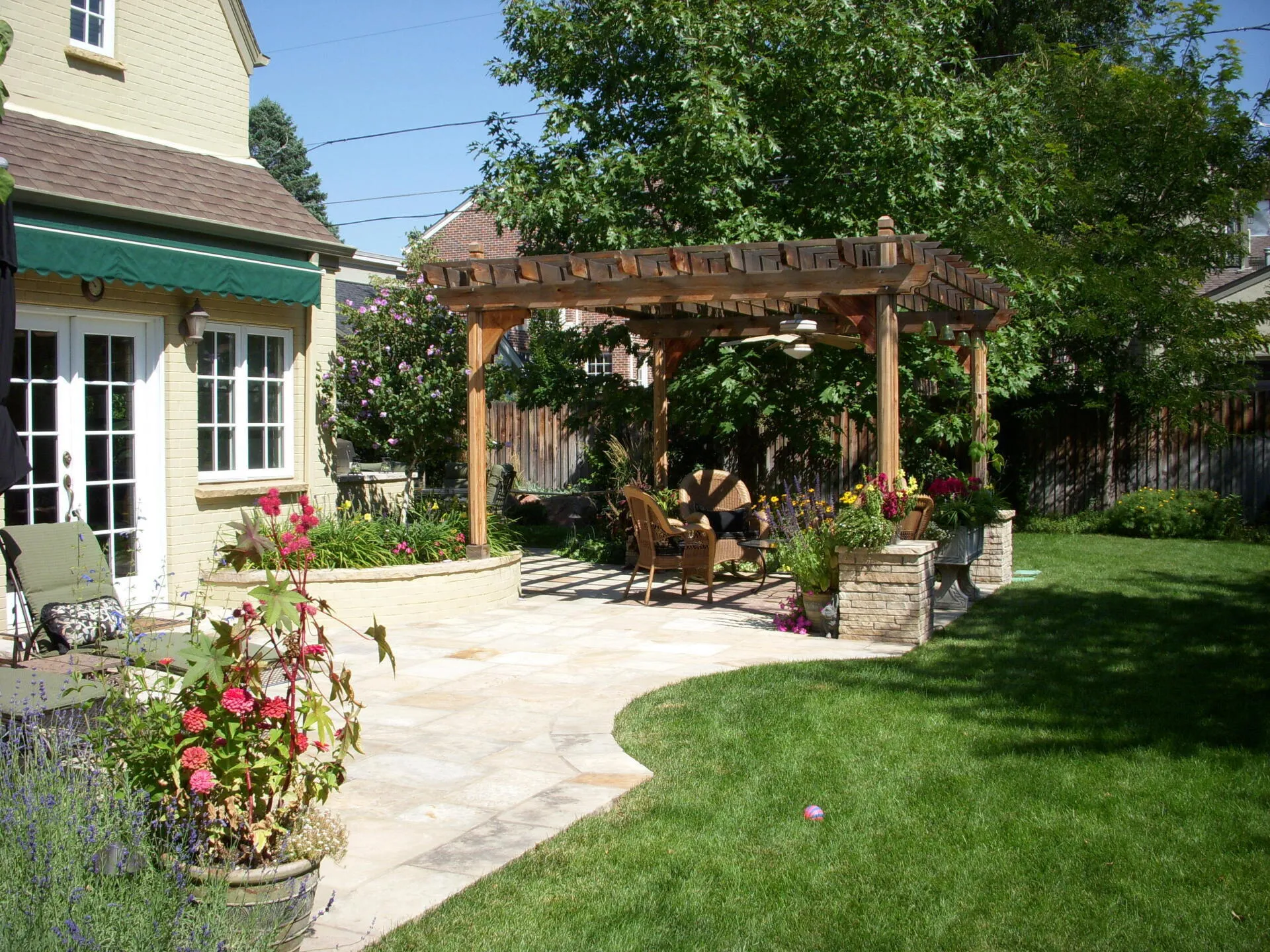
The design/build model eliminates the gap that causes all of the above. Instead of two separate parties working from the same document, one integrated team carries the project from the first design conversation through construction close-out. The designer who made the decisions is present when the site reveals something unexpected. The project manager who walked you through your preliminary plan is the same person coordinating the crew when ground breaks.
At Phase One Landscapes, that continuity is built into how we operate. Your designer serves as your project manager throughout the entire process. They’re with you through the initial consultation, through design revisions, through the construction agreement, and through every phase of the build. Our construction crews, subcontractors, and design staff all work under one roof and toward one shared outcome, which means nothing gets lost between the people responsible for your project.
The practical benefits of that structure are significant:
- Communication flows through one relationship rather than across two separate contracts
- Field decisions are made with full context, not educated guesses
- Change orders are handled proactively, with transparency and documentation, rather than reactively after a dispute
- The homeowner’s job is to make decisions, not to manage the people executing them
How Continuity Protects Your Investment
Design/build continuity isn’t just about having a better experience. It’s about protecting the financial investment behind the project.
Accurate budgeting is possible when the team pricing the work also designed it. They know what the plan actually requires because they built it. There are no interpretation gaps between what the designer specified and what the contractor bid. Fewer surprises from the start mean fewer reactive change orders and a more predictable final cost.
Efficient use of materials and labor comes from a team that has full context before the first shovel goes in the ground. And when a team has worked together for years, that efficiency compounds. Our construction manager has been with Phase One Landscapes for more than 30 years. Many of our foremen and crew leaders have been here for two decades or more. That kind of institutional knowledge means we’ve seen almost every site condition Denver can produce, and we know how to price honestly for it from the beginning.
The result is a business where roughly 60% of new work comes from referrals. Clients who trusted us with a significant investment and were happy enough to send their neighbors, their colleagues, and their family members back to us. That track record isn’t something you can manufacture. It’s built one project at a time, by a team that shows up accountable from the first meeting to the final walkthrough and beyond.
When the Unexpected Happens On Site
Outdoor construction in Denver regularly surfaces surprises. Drainage issues, unexpected soil conditions, utility conflicts, and grading challenges are common on Front Range properties. This isn’t a failure of planning. It’s the nature of working with the ground.
The difference between a design/build team and a fragmented one becomes most visible at exactly this moment. In a fragmented model, an unexpected site condition requires coordination between two separate parties before anything can move forward. Time stops while the designer and contractor negotiate responsibility.
In a design/build model, the team that finds the problem has the authority and the context to solve it. We assess it, document it clearly, and bring the homeowner a solution with full context, not just a number. Change orders are part of the process on almost every project. What matters is that they’re handled fairly, explained clearly, and resolved by people who are invested in the outcome rather than in minimizing their own exposure.
Post-Build Support Is Part of the Same Commitment
The continuity argument doesn’t end when the crew leaves. It extends into everything that happens after the final walkthrough.
When one company designed and built your outdoor space, warranty coverage is clean. There’s no dispute about whether a problem is a design issue or a construction issue, because the same team owns both. If something needs to be addressed, the same people who built it come back to address it.
At Phase One Landscapes, post-build support is structured, not optional:
- We conduct a 30-day satisfaction check-in on every completed project
- Any workmanship issues that surface after installation are addressed by the same crew that built it
- Hardscaping carries a two-year limited warranty
- If something isn’t right, we come back and make it right. That’s not a policy. It’s just how we operate
That level of follow-through is only possible because we’re one team. A designer who handed your plans off to a separate contractor three months ago doesn’t have a mechanism to stand behind the result. We do, because we never handed it off in the first place.
What to Look for When Choosing a Patio or Deck Builder in Denver
Whether you work with us or not, here’s how to evaluate any firm you’re considering for a patio or deck project in Denver:
- Ask whether the firm handles both design and construction in-house, or whether design and build are managed through separate relationships
- Confirm that the same person who designs your project will be present and accountable during construction
- Ask specifically how change orders are handled: who communicates them, how they’re documented, and who has the authority to approve solutions
- Ask how long the core team has worked together, not just how long the company has been in business
- Confirm what post-build support looks like and whether it’s included as part of the project
- Look for local project experience in Denver specifically, because our climate, soil conditions, and permit environment require knowledge that doesn’t transfer from other markets
These questions will tell you quickly whether you’re talking to a firm that owns the whole outcome or one that will hand your project off somewhere in the middle.
Why Denver Homeowners Specifically Benefit From the Design/Build Model
Denver is not a forgiving climate for shortcuts or for projects that lose coherence between design and construction. Freeze-thaw cycles affect paver joint stability, drainage performance, and foundation integrity in ways that have to be designed for from the beginning, not addressed after the fact. Clay-heavy soils across much of the Front Range create drainage and structural challenges that require site-specific solutions. Elevation and sun intensity affect how materials age, which means what works in a milder climate may not perform the same way at 5,280 feet.
When the team designing your outdoor space is the same team building it, that local knowledge is present at every stage. Material decisions are informed by construction realities. Construction decisions are informed by design intent. The result is a project that holds up through what Colorado winters actually deliver, not just what the specifications required.
We’ve been building in Denver since 1994. We’ve designed and constructed outdoor spaces across the metro area and the Front Range, through every condition this region produces. That experience doesn’t live in a document. It lives in the team that shows up on your site.
The Right Structure Makes the Difference
Choosing the right patio or deck builder in Denver means more than comparing portfolios and getting three bids. It means understanding how the project is structured and who is accountable for every part of it.
The design/build model keeps one team responsible for your project from the first sketch to the final stone. It eliminates the gap where miscommunication, cost overruns, and delays tend to live. And when the same team stands behind both the design and the construction, the warranty actually means something.
If you’re planning a patio or deck project and want to understand what our process looks like from start to finish, we’d welcome the conversation. Request an appointment today, and learn more about how our patio and deck design/build process works at Phase One Landscapes.

About Phase One Landscapes
At Phase One Landscapes, we put your goals at the center of every design. With years of hands-on experience across Colorado, a passion for creativity, and a commitment to honest, friendly service, we’d be honored to guide your landscape transformation.
Ready to bring your dream yard to life? Contact us today for a consultation—let’s start the next chapter of your outdoor story together.
We can’t wait to hear your ideas—and turn them into reality!