

Four Seasons, One Water Feature: A Denver Homeowner’s Guide to Year-Round Care in Colorado
Water feature maintenance in Denver requires a different approach when compared to other areas of the country due largely in part to Colorado’s altitude, freeze-thaw cycles, and hard water, leading to the creation of conditions most homeowners don’t anticipate. At Phase One Landscapes, we’ve been designing, building, and maintaining custom ponds, waterfalls, fountains, and pondless systems across the Greater Denver Metro and Front Range since 1994, and the seasonal demands here are real. This guide walks you through what your water feature needs across all four Colorado seasons, why timing is important, and when it’s worth calling in a professional.
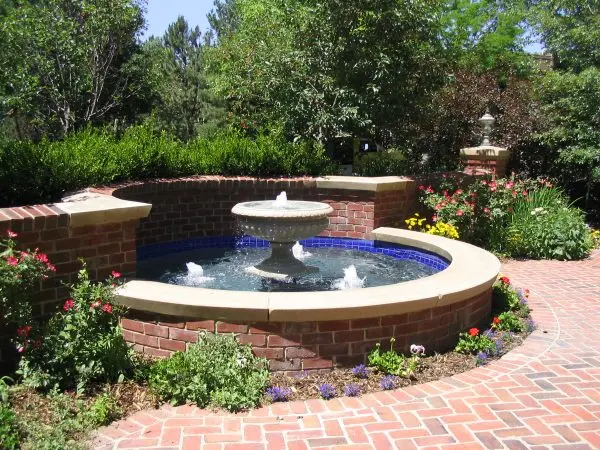
The Short Answer: What Denver Water Features Need Each Season
Denver water features require four distinct maintenance phases all tied specifically to Colorado’s climate. Spring startup, running roughly April through May, restores equipment after winter shutdown to re-establish biological filtration. Summer focuses on water quality, evaporation management, and debris control, while fall prepares systems before the first hard freeze. Winter shutdown and winterization protects pumps, plumbing, and liners from Colorado’s repeated freeze-thaw cycles.
| Season | Key Tasks | Timing | DIY or Pro |
|---|---|---|---|
| Spring Startup | Pump reinstall, filter cleaning, bacteria treatment | Late March to May | Both |
| Summer Operation | Debris removal, water top-off, algae management | June through August | Mostly DIY |
| Fall Preparation | Pump removal, debris clearing, winterization | September to November | Both |
| Winter Shutdown | Monitor, de-icer check (koi ponds), visual inspection | November through March | Mostly DIY |
Why Denver’s Climate Makes Water Feature Care Different
Altitude and UV Intensity
Altitude alone changes the math on water feature maintenance. At Denver’s elevation, UV intensity is higher than at sea level, which means liner materials degrade faster and algae can grow more aggressively in summer than homeowners coming from lower-elevation states expect. A water feature that was low-maintenance in Atlanta or Portland can seem like a full-time job in Colorado without the right seasonal approach.Freeze-Thaw Cycles
Freeze-thaw cycles are the other force that surprises people. Denver doesn’t experience one sustained winter freeze the way northern climates do. Instead, temperatures can drop below freezing overnight and climb into the 50s or 60s the following afternoon, sometimes multiple times in a single week. That repeated expansion and contraction puts stress on plumbing fittings, pump housings, and liner seams if a system hasn’t been properly shut down.Hard Water and Cottonwood Season
Denver’s hard water adds a third layer of complexity. Mineral scale accumulates faster here than in most markets, building up inside pump impellers and staining fountain surfaces in ways that compound if left unaddressed year after year. Cottonwood season, which runs roughly late April through June, adds to the workload by packing skimmer baskets so fast that weekly checks become necessary. These are the conditions we manage for every water feature project we build and maintain across Denver and the Front Range.Spring Startup: Bringing Your Denver Water Feature Back to Life
Timing is Key
Spring is the most important maintenance window of the year, and what you do, or don’t do, in April sets the condition of your water feature for the next eight months. In Denver, we don’t recommend restarting by calendar date. We go by temperature: your water feature’s biological system needs nighttime temps to be consistently above freezing and water temperatures to reach at least 50 degrees Fahrenheit before you introduce beneficial bacteria to a naturalistic system like a Biofalls-style pond. Restart too early and the bacteria won’t establish. Wait too long and algae gets a head start.
Pump Inspection
Pump inspection is the step homeowners most often skip, and it’s also one of the most consequential. After a Colorado winter, a pump that looks fine may have a cracked housing or a compromised impeller seal from freeze stress, so running a quick check before reinstalling it in the feature is worth the extra few minutes. If water output drops noticeably after startup, that’s a sign the pump took damage over winter, not a sign that it just needs time to warm up.
Cottonwood Season and Koi Ponds
Cottonwood season overlaps with spring startup and runs through June along the Front Range, and during this window skimmer baskets can fill in a matter of days, especially on properties with mature trees nearby. For koi pond owners, fish become active again as water warms and their metabolism increases, so resume feeding cautiously and in small amounts until water temperature is consistently above 50 degrees Fahrenheit. Spring inspection for Denver pond maintenance also includes a liner walk-through to catch any winter stress cracks or seam movement before water loss becomes a problem.
Spring Startup Checklist for Colorado Ponds and Fountains
- Work through these steps in order when nighttime temperatures are consistently above freezing and water temps are approaching 50 degrees F.
- Inspect the submersible pump for freeze damage before reinstalling.
- Reinstall the pump and test flow rate at startup.
- Clean filter mats and skimmer baskets thoroughly and remove all winter debris.
- Check liner surfaces for cracks, bubbling, or seam separation.
- Test the auto-fill valve to confirm it’s operating and filling to the correct level.
- Apply the first beneficial bacteria treatment of the season once water temperature reaches 50 degrees F.
- Inspect all plumbing connections and fittings for freeze stress.
- Clear debris and sediment from the feature bottom.
- Walk the waterfall and stream bed for stone displacement from winter freeze-thaw events.
- Resume fish feeding gradually as water temperature climbs.
- If the pump shows reduced output or any plumbing connection appears stressed, schedule a professional inspection before running the system at full capacity.
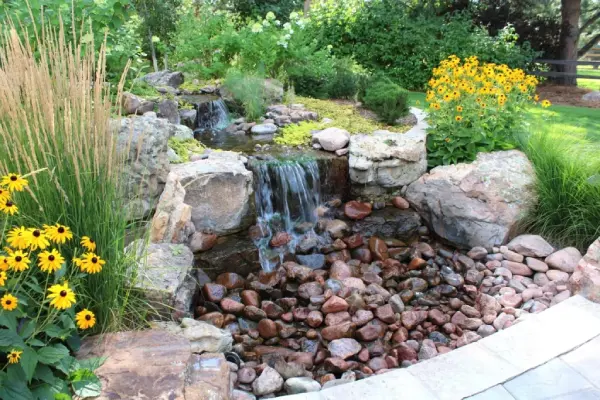
Summer Management: Keeping Denver Water Features Clear and Healthy
Evaporation and Water Restrictions
Denver’s summer brings intense UV, low humidity, and monsoon season, each of which creates specific water feature challenges. Evaporation runs faster here than most homeowners expect, and in a hot stretch a feature can lose one to two inches of water per week, which puts the pump at risk of running dry and damaging its impeller. Check water levels weekly and top off as needed, but first check Denver Water’s current restrictions, since outdoor water use limitations can affect how and when you refill.
Algae Management
Algae management is a summer constant in Colorado. The combination of UV intensity and warm water temperatures creates conditions where algae grows, particularly in features without adequate biological filtration. Beneficial bacteria treatments every one to two weeks during the operating season help maintain biological balance, though some string algae is normal in a naturalistic pond. It is not a sign of system failure, and treating it with chemicals in a koi pond can do more harm than good. Water feature cleaning in a naturalistic system is about balance, not sterility.
Hard Water and Heat Waves
For fountains and architectural water features, Denver’s hard water becomes most visible in summer, as mineral scale accumulates on basin surfaces and pump components each time water evaporates in the heat. A diluted white vinegar solution handles mild deposits well and won’t damage most fountain materials. For koi ponds during heat waves when water temperatures climb above 80 degrees F, aerators become important because warm water holds less dissolved oxygen and fish will show signs of stress at the surface when levels drop. Monsoon season in July and August also brings wind-blown debris that loads skimmer baskets faster than the rest of the year.
DIY Tasks vs. Professional Service: A Practical Comparison
Owning a water feature doesn’t mean becoming a full-time maintenance technician. Most weekly tasks are straightforward, and the seasonal transitions, spring startup and fall shutdown, are where professional eyes catch what homeowners miss. If you’re looking for consistent, expert support across the season, our seasonal maintenance services are built for exactly that.
| Homeowner Tasks | Professional Service |
|---|---|
| Check and empty skimmer baskets weekly | Spring startup pump inspection and reinstallation |
| Top off water levels | Liner integrity assessment |
| Remove visible surface debris | Plumbing and fitting inspection |
| Light algae brushing on fountain surfaces | Deep filter cleaning and media replacement |
| Monthly visual pump check | Pump servicing or replacement |
| Monitor fish behavior for signs of stress | Water quality testing and balancing |
| Fall winterization and full system shutdown |
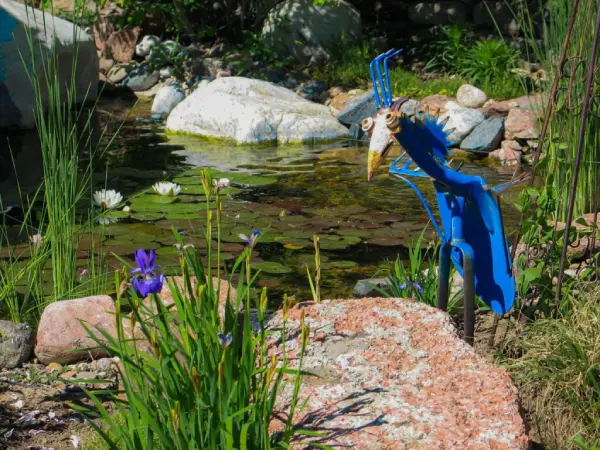
Fall Preparation: Getting Your Water Feature Ready for a Colorado Winter
Preventing Damage
Fall preparation is where the most preventable damage happens to most water features, and the mistake is rarely negligence, it’s all about timing. Homeowners often treat winterization as a November task, but the Front Range can see hard freeze events in late September or October, and once a pump freezes in place, the repair cost is almost always higher than the cost of an earlier shutdown would have been.
Optimal Timing
Our recommendation is to begin fall prep when nighttime temperatures are consistently dropping below 50 degrees F, not when the calendar hits a certain date. For Front Range properties at typical Denver elevations, that often means mid-to-late October, and at higher elevations in the foothills, it can be a month earlier. Treating winterization as a temperature-driven task rather than a seasonal ritual is one of the better habits a water feature owner can develop.
Naturalistic Systems
For naturalistic systems, including Biofalls-style ponds, koi ponds, and pondless waterfalls, the process starts with the fish. Stop feeding when water temperatures drop below 50 degrees F, because fish metabolism slows at that threshold and uneaten food becomes organic waste that degrades water quality under the ice all winter. Remove the submersible pump before any hard freeze, clean filter mats and skimmer baskets thoroughly, and consider a cold-water beneficial bacteria treatment to reduce organic breakdown during the shutdown period. Leaf and debris removal is also important before the feature closes, since organic matter decomposing under ice all winter creates conditions that are hard on both fish and the feature itself.
Architectural Water Features and Fountains
For architectural water features and formal fountains, fall means a full drain and a blowout of plumbing lines. Don’t assume a fountain basin will be fine if it holds residual water, because Colorado’s freeze-thaw cycles will find any water left in the system. Pump components should come indoors for winter storage, and basin surfaces should be cleaned of mineral deposits before the season closes. For full details on the winterization process, our guide to Denver water feature winterization explains more.
Fall Shutdown Checklist: Naturalistic vs. Architectural Water Features
For naturalistic features (ponds, Biofalls systems, koi ponds, pondless waterfalls):
- Stop fish feeding when water temperature drops consistently below 50 degrees F.
- Remove and store the submersible pump before the first hard freeze.
- Clean all filter mats and skimmer baskets thoroughly.
- Remove aquatic plant debris and trim back dying material.
- Add a cold-water beneficial bacteria treatment to reduce organic breakdown over winter.
- If fish are overwintering, consider a pond aerator or de-icer to maintain a gas exchange opening through the ice.
For architectural features (formal fountains, pool-style water features):
- Fully drain the water basin and blow out plumbing lines to clear any remaining water.
- Remove and store pump components indoors.
- Clean all mineral deposits from basin surfaces.
- Inspect for any surface cracks or liner stress before spring.
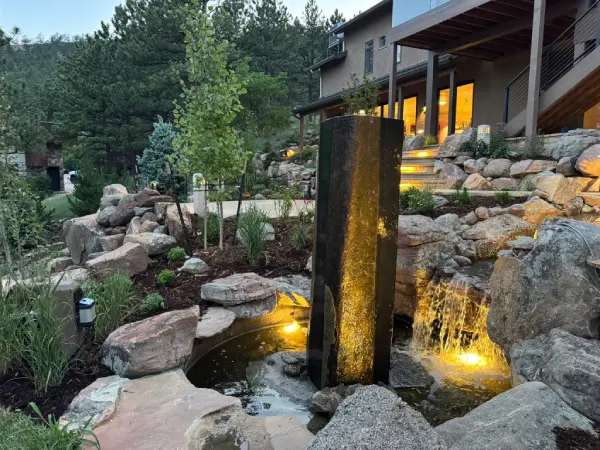
Winter: What Happens to Your Denver Water Feature When It’s Off
Koi Ponds in Winter
Many homeowners assume winter means no maintenance, and that’s mostly true with one important exception: koi ponds with fish overwintering. Without a de-icer or aerator maintaining a gas exchange opening through the ice, toxic gases from decomposing organic matter build up under the surface and can harm or kill fish. The feature doesn’t need to be running, but that opening in the ice matters throughout the cold months.Pondless Systems and Dry Features
For pondless systems and dry features after pump removal, the winter requirement is minimal. A periodic visual check after significant freeze-thaw events is worthwhile to catch any stone or liner movement before spring. Colorado’s winters don’t produce one clean freeze. They cycle repeatedly through freeze and thaw, and features that weren’t fully drained can absorb snowmelt and refreeze in ways that cause damage that only shows up at startup.Fountains and Architectural Water Features
For fountains and architectural water features, confirm that full drainage holds through the first hard freezes and check after the season’s first significant thaw for any water infiltration, liner movement, or surface cracking. The features that need the most attention in spring are usually the ones that weren’t fully dried in fall, which is another reason the fall shutdown process is worth doing carefully. Our team follows up on completed projects as part of our post-project care program, including a 30-day check-in and coverage under our 2-year hardscape warranty.Water Feature Types We Maintain in Denver: One Approach Does Not Fit All
Koi Ponds and Naturalistic Ponds
Different water features have different seasonal care needs, and treating them the same way is one of the more common sources of problems we see. Koi ponds and naturalistic ponds rely on a living biological filtration system where the beneficial bacteria colony that keeps the water clear and healthy must be re-established each spring and protected in fall. Fish add a layer of seasonal responsibility that a pondless system simply doesn’t have, and that distinction shapes every maintenance decision from April through November.Pondless Waterfalls and Cascading Systems
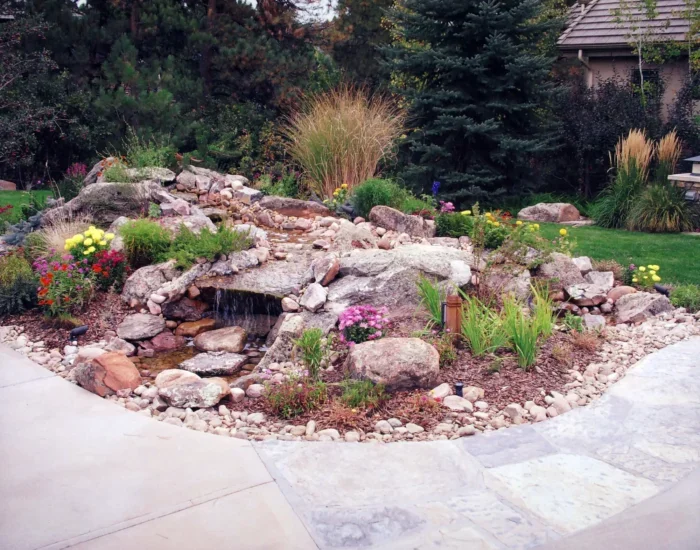
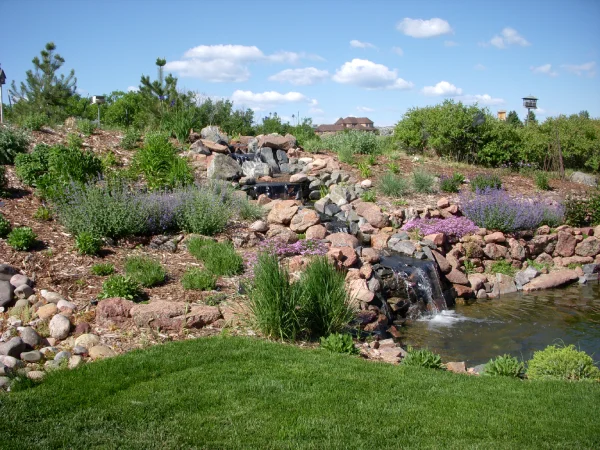
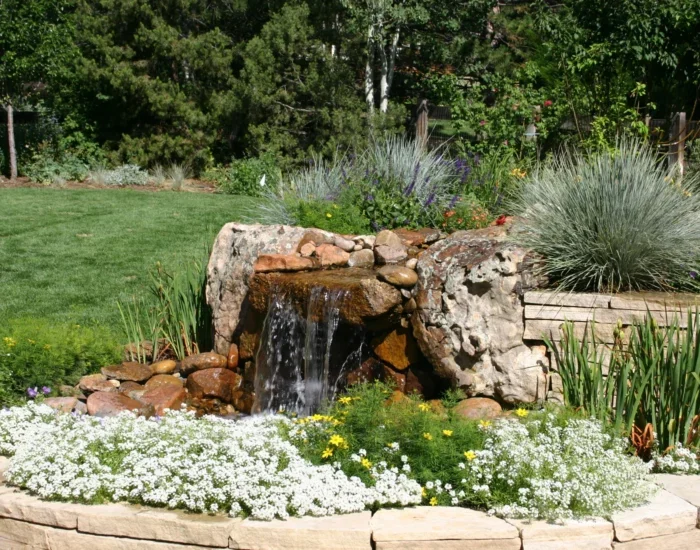
Pondless waterfall systems have lower maintenance demands than koi ponds, but the hidden reservoir is where debris accumulates out of sight, and seasonal attention to the pump box and reservoir interior keeps these systems running cleanly. Cascading waterfall and stream systems need an annual inspection for stone displacement, which is common after hard winter freeze-thaw cycles and summer storm events.Water Feature Fountains and Bubbling Rocks
Water feature fountains and bubbling rocks are simpler mechanically, but Denver’s hard water causes pump impeller clogging over time. Regular cleaning prevents the gradual flow reduction that signals a pump is working harder than it should, and catching that early extends the life of the pump considerably.Architectural Water Features
Architectural water features, maintained more like a small pool with chemical balance, UV filtration, or ozone generators, require a different care approach than naturalistic systems. Not treating them appropriately leads to either over-treatment or under-treatment, both of which create problems that are harder to correct mid-season.When to Call a Professional: Signs Your Water Feature Needs Expert Attention
Some problems are obvious, but many problems start out as something subtle that’s easy to rationalize away. The following are the signs we’ve learned over the years that something needs a professional look before it gets worse.
- Pump runs but water output has dropped: This typically means a clogged impeller, a failing seal, or a plumbing restriction. Running a compromised pump doesn’t clear the problem; it accelerates wear.
- Persistent murky or green water despite regular bacteria treatments: This often indicates an imbalanced biological system, inadequate filtration, or a liner issue allowing soil intrusion. The fix is usually not more bacteria.
- Visible liner damage, soft spots, or bubbling in the feature floor: This needs assessment before water loss becomes significant. A small liner repair addressed early is far less disruptive than a full liner replacement.
- Water level that drops faster than evaporation alone can explain: This is a slow leak until proven otherwise, and a liner shifting over time compounds the problem.
- Any pump or plumbing component that experiences freeze damage from improper winterization: This should always be inspected before the system runs again.
- In a koi pond, fish gasping at the surface or showing lethargy: If occurring outside of normal seasonal behavior, this is a signal that dissolved oxygen, water quality, or temperature stress is at a concerning level.
After more than 35 years of designing, building, and helping to maintain water features of all types, we’ve seen every one of these failure modes, and the majority are preventable with consistent seasonal care. If something looks off, or you want help with recurring maintenance, reach out to through our Contact Page, or call us at 303-750-6060.
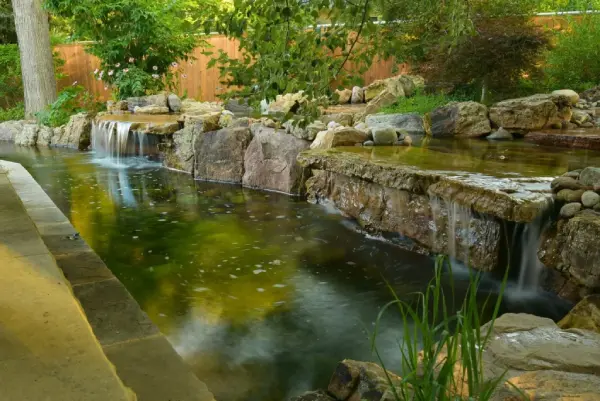
What 35 Years of Denver Water Feature Work Has Taught Us
Winterization Timing
The most consistent mistake we see is winterizing too late. Homeowners wait until November because that feels like winter, but Denver’s shoulder season is deceptive. Nights in late September and October can drop below freezing, and a pump left in a feature through that first hard freeze often doesn’t come out undamaged.
Beneficial Bacteria Importance
Beneficial bacteria is the foundation of a healthy naturalistic water feature, and homeowners who skip or delay the spring bacteria treatment when water temps reach 50 degrees F end up fighting algae and water clarity problems all summer. The bacteria is the filtration system, and treating it as optional rather than foundational is one of the more predictable paths to a difficult season.
Denver’s Hard Water
Denver’s hard water is underestimated by nearly every homeowner who hasn’t lived with a water feature through multiple seasons here. Mineral scale builds faster than most people expect, and pump impellers that clog quietly over two or three years of scale accumulation are much harder to remediate than they would have been with routine cleaning each season.
Continuous Operation
A Biofalls naturalistic system is designed to run continuously during the operating season. Shutting it off for extended periods during summer, thinking you’re saving on electricity, disrupts the biological cycle and causes water quality problems that are harder to correct than the energy savings are worth.
Long-Term Durability
The features that hold up best across decades are the ones where the homeowner stays engaged with seasonal care. We build with that long-term durability in mind, which is why our work is backed by a 1-year plant warranty and a 2-year hardscape warranty, and why we’ve been recognized by the Association of Landscape Contractors of Colorado with 17 projects awarded since 1987, including 4 Grand Awards.
Frequently Asked Questions About Water Feature Maintenance in Denver
When should I shut down my pond or water feature in Denver?
Timing depends on nighttime temperatures, not the calendar. We recommend beginning shutdown when nights consistently fall below 40 to 50 degrees F and always before a hard freeze. On the Front Range that typically means late October to mid-November, but at higher elevations or in exposed locations, it can be weeks earlier.
How often should I clean my water feature?
Skimmer baskets need checking weekly during cottonwood season, which runs late April through June, and after any significant storm. Filter mats need cleaning monthly during the operating season, and a thorough deep clean at spring startup, before restarting the pump, sets the feature up well for the months ahead.
Can I leave my fountain running through a Denver winter?
Most residential fountains should be fully shut down and drained for winter. Colorado’s freeze-thaw cycles can crack pump housings, split plumbing fittings, and damage fountain basins even in features that seem frost-tolerant, and the cost of a proper shutdown is always less than the repair.
What causes murky water in my Denver pond?
Murky water usually signals an imbalance in biological filtration. Too much organic debris, insufficient beneficial bacteria, or a filter that needs cleaning are the most common causes, and Denver’s intense UV also accelerates algae growth in summer, which can cloud water quickly. For persistent murky water, a professional can identify whether the problem is filtration, debris load, or something structural.
Your Denver Water Feature Deserves Year-Round Stewardship
Colorado’s climate is demanding in specific ways, and a water feature that gets consistent, seasonally appropriate attention will look better, last longer, and cost less to maintain over time than one that only gets care when something goes wrong. At Phase One Landscapes, we’re not a company that installs a feature and moves on. Our in-house team, the same people who design and build these features, stays involved through post-project care, seasonal check-ins, and the warranty program that backs our work.
We’ve been doing this work across Denver, Cherry Hills Village, Greenwood Village, Littleton, Highlands Ranch, Parker, Castle Rock, and Boulder for more than 30 years, and our team has the tenure to match. If you have a water feature that needs a seasonal check-up, or if you’re planning to add one and want to understand what long-term care actually looks like, we’re available to talk. Reach out through our Contact Page, or call us at 303-750-6060, Monday through Friday, 8am to 5pm, or Saturday by appointment.

About Phase One Landscapes
At Phase One Landscapes, we put your goals at the center of every design. With years of hands-on experience across Colorado, a passion for creativity, and a commitment to honest, friendly service, we’d be honored to guide your landscape transformation.
Ready to bring your dream yard to life? Contact us today for a consultation—let’s start the next chapter of your outdoor story together.
We can’t wait to hear your ideas—and turn them into reality!

Written by Dave Graham
Dave is a Denver native and co‑founder of Phase One Landscapes. After earning a B.S. in Landscape Architecture from Iowa State University in 1981, he worked as a laborer, construction foreman, and designer, learning residential design/build from the ground up. In 1988 he partnered with Dennis Frank to launch Phase One Landscapes, which has delivered hundreds of landscapes across Greater Denver. Dave prioritizes quality and service and remains involved with clients and teams. The firm’s projects have earned ALCC awards, appeared on ASLA Garden tours, and been published in national and local magazines.