

Curb Appeal by Design: How to Unify Your Driveway, Walkways, and Landscape Borders
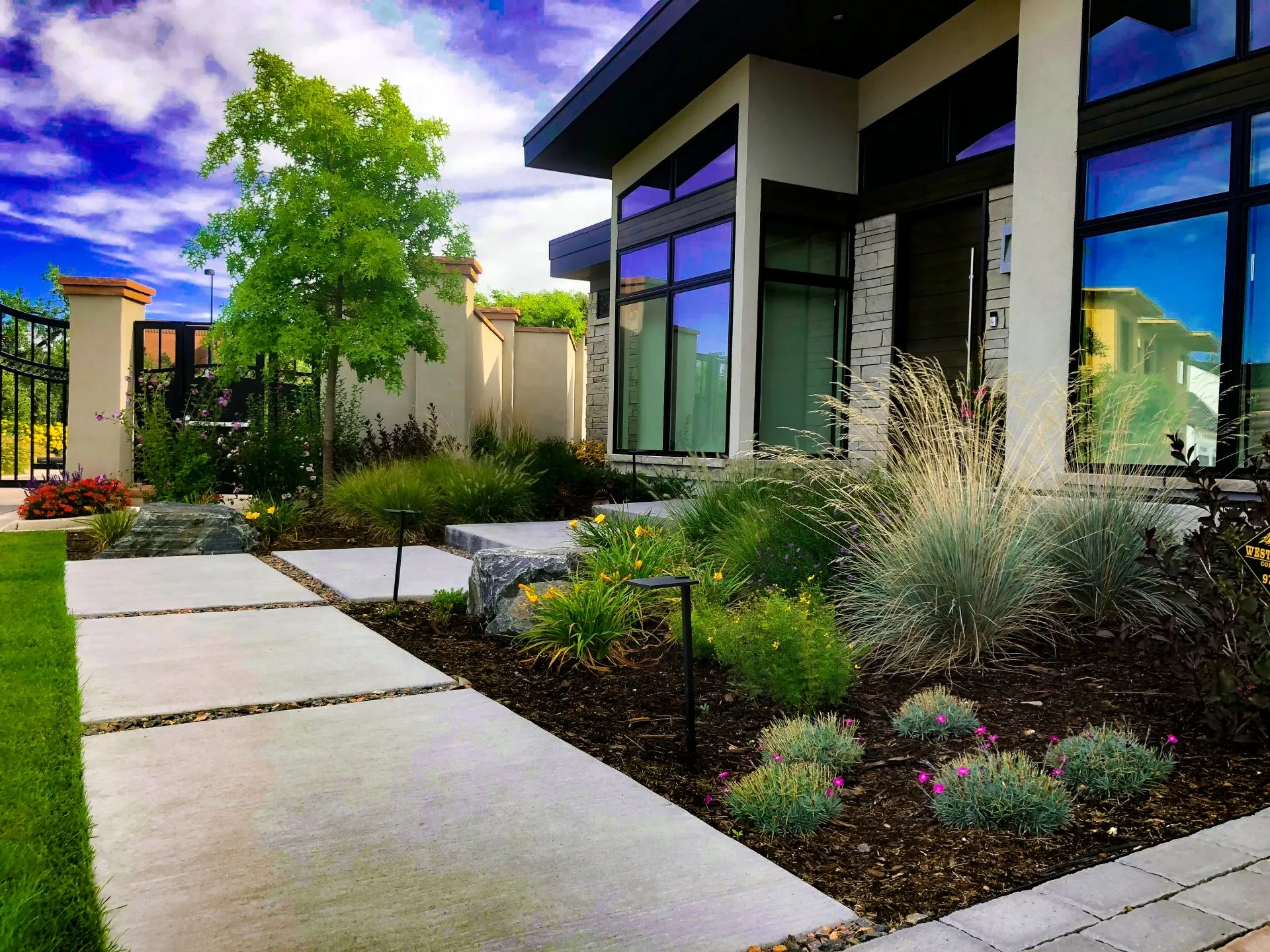
Your Front Entry Is One Design, Not Three Separate Projects
Most homeowners approach their front entry in stages. The driveway gets replaced when it starts cracking. A new walkway goes in a few years later. Eventually, some border plantings get added around the edges. Each decision seems reasonable on its own, but the result often looks exactly like what it is: a series of separate upgrades that were never planned to work together.
The result is visual fragmentation. Things are technically functional, but nothing quite connects. The entry looks assembled rather than designed.
There’s a better way to think about it. Your driveway, walkway, and landscape borders are not independent features. They’re one system, and when they’re planned that way, the front of your home communicates something entirely different. It communicates intention. It communicates quality. And it makes a lasting first impression before anyone even reaches the front door.
This is what we mean when Phase One Landscapes talks about the arrival experience. Every element your eye touches as you approach a home either adds to that experience or subtracts from it. Cohesive front entry and curb appeal design is what makes the difference.
Thinking in Systems: How the Three Elements Work Together
Once you start seeing your front entry as a single design zone, the individual elements take on clearer roles.
The driveway is the largest visual anchor. It’s the first hardscape surface a visitor sees, and it sets the tone for everything that follows. Its material, color, and finish establish a baseline that the rest of the entry should respond to.
The walkway is the connective tissue. It directs movement from the street or driveway to the front door, shaping the actual experience of approaching your home. A well-designed walkway feels intuitive. You don’t think about where to go. You just move naturally toward the entry.
The landscape borders are the frame. They define edges, soften transitions between hard surfaces and planting areas, and signal that the design was considered as a whole. Borders that feel thrown in as an afterthought undermine an otherwise strong hardscape plan. Borders that were designed as part of the composition pull everything together.
When these three elements share a consistent material palette, complementary geometry, and thoughtful edge detailing, the front entry feels designed rather than installed. That distinction is exactly what separates a polished property from one that just has nice individual features.
We refer to this as building a hardscape system. Each piece has its own job, but they’re all working toward the same outcome.
Material Coordination: Making the Right Choices for Visual Harmony
Material selection is where cohesion is either built or lost. The most common mistake isn’t selecting bad materials, it’s choosing materials one at a time without considering how they’ll read together.
A few principles that guide good material coordination:
- Choose materials as a family, not individually. Before committing to anything, consider how the driveway surface, walkway material, border edging, and planting selections will relate to each other and to your home’s exterior.
- Color and texture need to coordinate. Warm-toned stone pairs naturally with warm brick or stucco. Cool-toned concrete and grey pavers work well with modern or contemporary exteriors. Mixing warm and cool tones without intention creates visual tension.
- Scale matters more than most homeowners expect. Large-format pavers on a modest front walk can feel overwhelming. Thin, delicate borders on a sprawling entry can disappear entirely. The scale of every material should be proportional to the home and to the other elements around it.
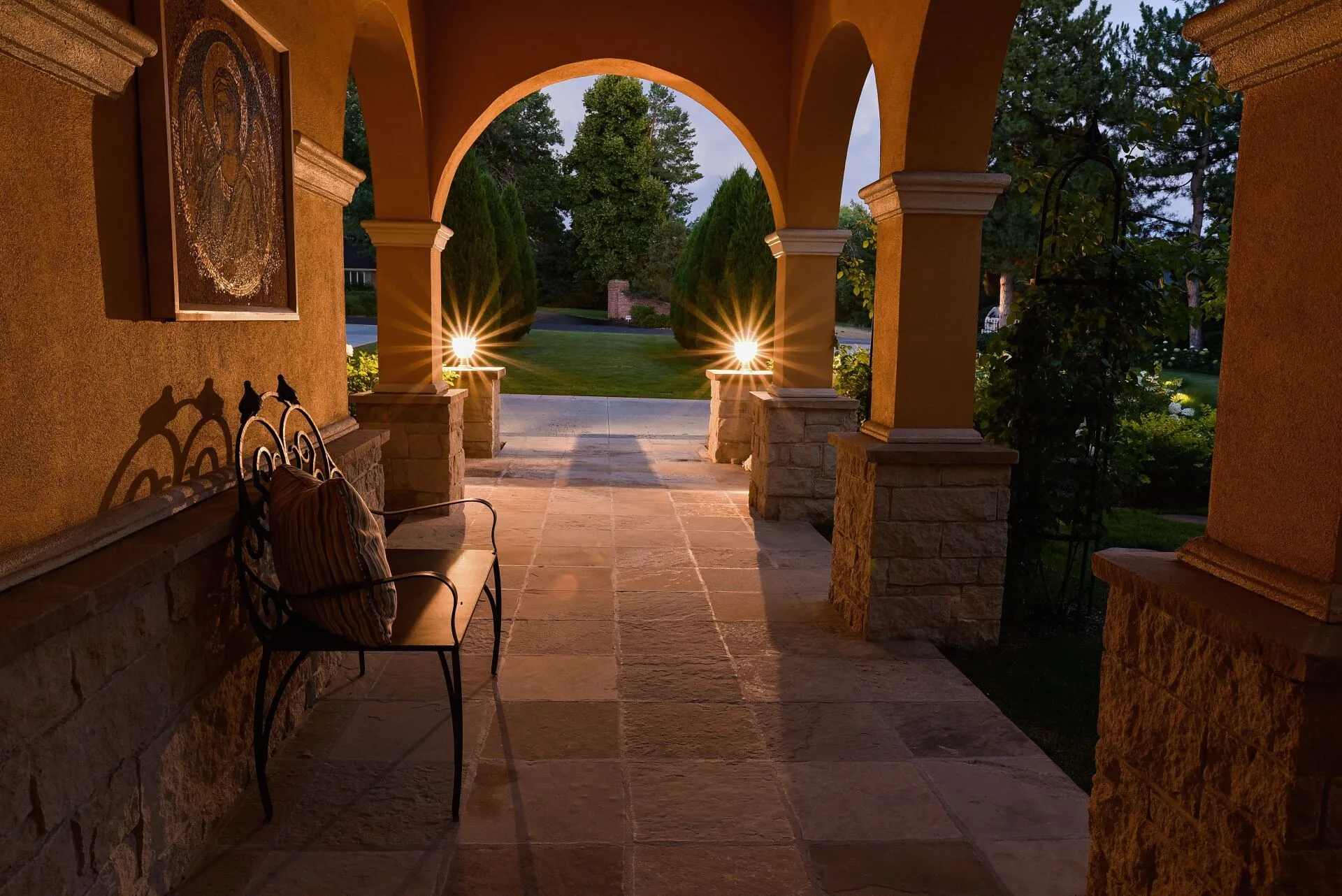
- Transitions are where the quality shows. The joint between your driveway and walkway, the edge where pavers meet turf, the step from the walk to the entry landing: these moments either reinforce the design or expose its weaknesses.
Matching Materials to Your Home’s Architecture
The hardscape should feel like it belongs to the home, not like it was added to it. Landscape architecture should drive material selection more than personal preference alone.
For modern and contemporary homes, clean lines, large-format pavers, and low-profile edging with minimal ornamentation tend to work best. The geometry should be precise and the palette restrained.
For traditional and craftsman-style homes, symmetrical layouts, classic brick or natural stone, and more structured border definitions align with the architectural character. These homes reward a bit more formality in the hardscape design.
For Colorado and mountain-influenced styles, natural flagstone, irregular patterns, boulder accents, and plantings that feel native to the region create the kind of organic integration that suits the setting. The goal is to make your hardscaping feels like it grew out of the landscape rather than being imposed on it.
In every case, the test is the same: hold the material sample up against your home’s exterior color, texture, and style before committing. What looks beautiful in isolation can conflict badly with a warm red brick facade or a cool-toned modern stucco finish.
Denver-Specific Considerations Every Homeowner Should Know
Landscape construction for hardscaping in Denver is not the same as building it anywhere else. The climate creates specific demands that directly affect material selection, installation standards, and long-term performance. Understanding these realities upfront saves significant time and money down the road.
Here’s what matters most for front entry curb appeal in Denver:
- 1. Freeze-thaw cycles are hard on materials: Denver experiences significant temperature swings throughout the year, and materials expand and contract with each cycle. Installations without proper base preparation will shift, crack, and settle over time. This isn’t a question of if, it’s a question of when.
- 2. Frost heave is a real risk: On sloped or poorly drained properties, frost heave can push hardscaping elements out of alignment over a single winter. Proper grading, appropriate base depth, and attention to drainage are what prevent it.
- 3. Drainage needs to be designed in from the start: A driveway or walkway that directs water toward the foundation, or a front entry that pools in winter, creates structural and safety problems that are expensive to correct after the fact. Drainage isn’t an afterthought in good hardscape design. It’s a foundational consideration.
- 4. Permeable options are worth considering: Permeable pavers and decomposed granite have become increasingly popular in Denver for their drainage benefits and alignment with water-conscious design principles. For homeowners in areas with strict runoff requirements, they can also simplify compliance.
- 5. Base preparation is where the project is won or lost: A well-installed paver driveway with a properly compacted base will hold up through decades of Colorado winters. The same paver installed over an inadequate base will show problems within a few seasons. You don’t see the base when the job is done, but you feel it for years afterward.
Working with a team that understands Denver’s soil conditions, local permitting requirements, and climate-specific installation standards isn’t optional if you want results that last.
The Real Cost of Piecemeal Upgrades
The staged approach to front entry upgrades feels financially sensible. Spread the cost out over time, tackle one thing at a time, and eventually arrive at a finished product. In practice, it almost always costs more and delivers less.
Here’s what tends to happen:
- Different contractors, different material sources, and different installation standards across projects mean the elements rarely look like they were meant to go together, because they weren’t.
- Colors and textures that seemed close enough at the time rarely age together the way a coordinated palette does. What looks acceptable on day one can look noticeably mismatched after a few years of weathering.
- Rework is expensive. Coming back to adjust drainage, re-grade a transition, or replace materials that don’t integrate with a later addition costs more than getting it right the first time.
- The layout decisions made for the driveway may not leave ideal space or flow for the walkway that comes later. Each project constrains the next one.
The Denver landscaping professionals at Phase One Landscapes have worked with homeowners who came to us after five or six years of staged upgrades with two or three different contractors. They’d spent real money. They still didn’t love the result. When we looked at the front of their home, the problem was almost never any individual piece. It was that nobody had ever planned the whole thing together.
Cohesive planning upfront reduces long-term cost, eliminates design regret, and delivers a result that holds its value over time.
Details That Elevate the Finished Result
The difference between a front entry that looks good and one that looks genuinely refined often comes down to decisions most homeowners don’t know to think about until they see them done well.
A few of the details that tend to have the biggest impact:
- Border edging style. The transition between a hardscape surface and a planting area is one of the most visible details in a front entry. Clean, well-chosen edging creates definition and a sense of craftsmanship. Poorly chosen or installed edging undermines an otherwise strong design.
- Soldier courses and accent bands. A border course of pavers set perpendicular to the field, or a subtle band of contrasting material running through a driveway or walkway, adds custom character without complicating the overall design.
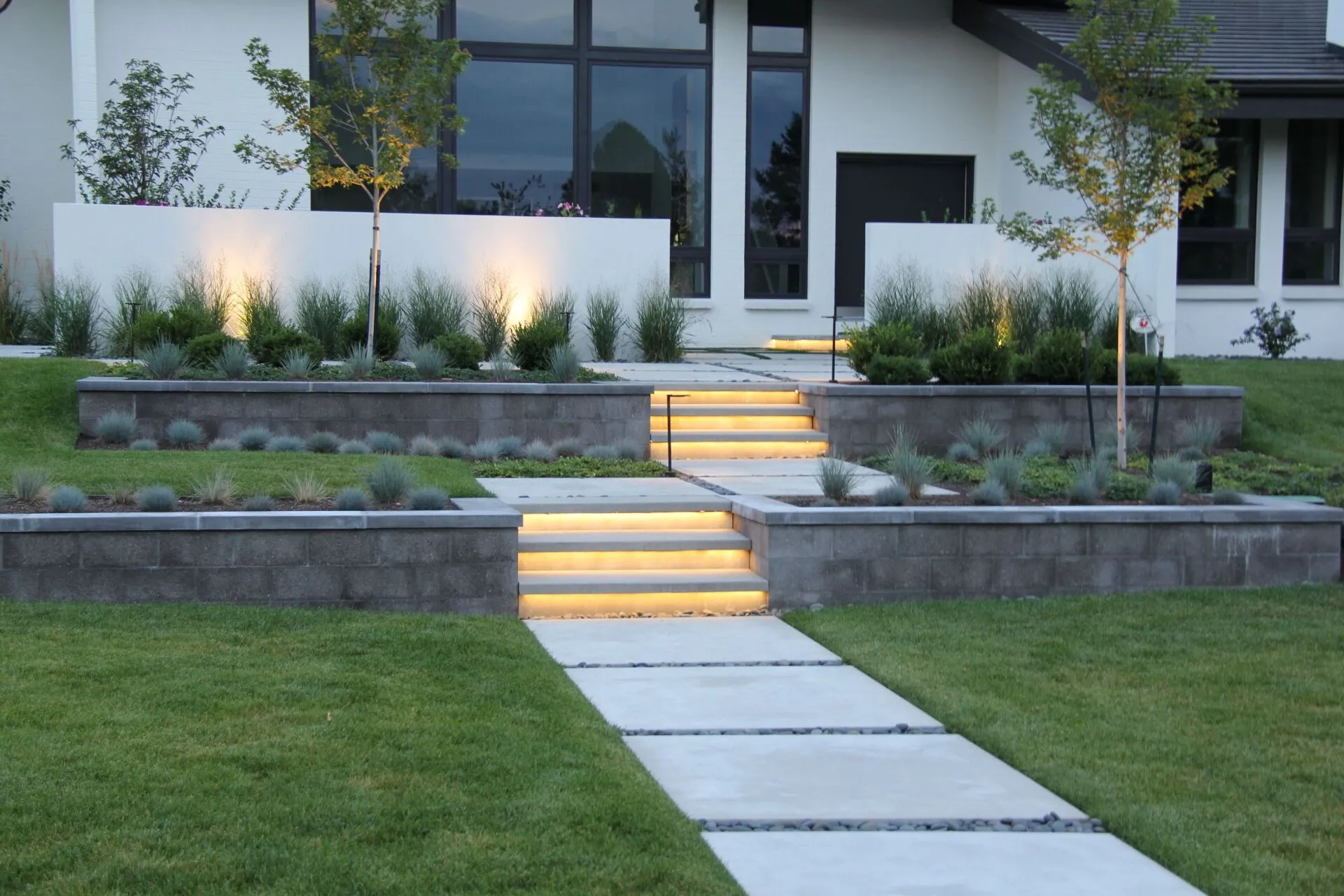
- Surface transitions. Where the driveway meets the walkway, where the walkway meets the entry step, where pavers give way to turf: these joints are where the quality of a project is most visible to a trained eye. Handled well, they feel invisible. Handled poorly, they draw attention for the wrong reasons.
- Lighting integration. Path lighting, uplighting at key plantings or architectural features, and step lighting that’s built into the design from the start looks far more intentional than fixtures added after the fact.
Most people can’t articulate exactly what makes one front entry feel more refined than another. They simply feel the difference. It almost always comes down to how the transitions were handled and whether the small decisions were made with the whole picture in mind.
Why Integrated Planning Delivers Better Outcomes
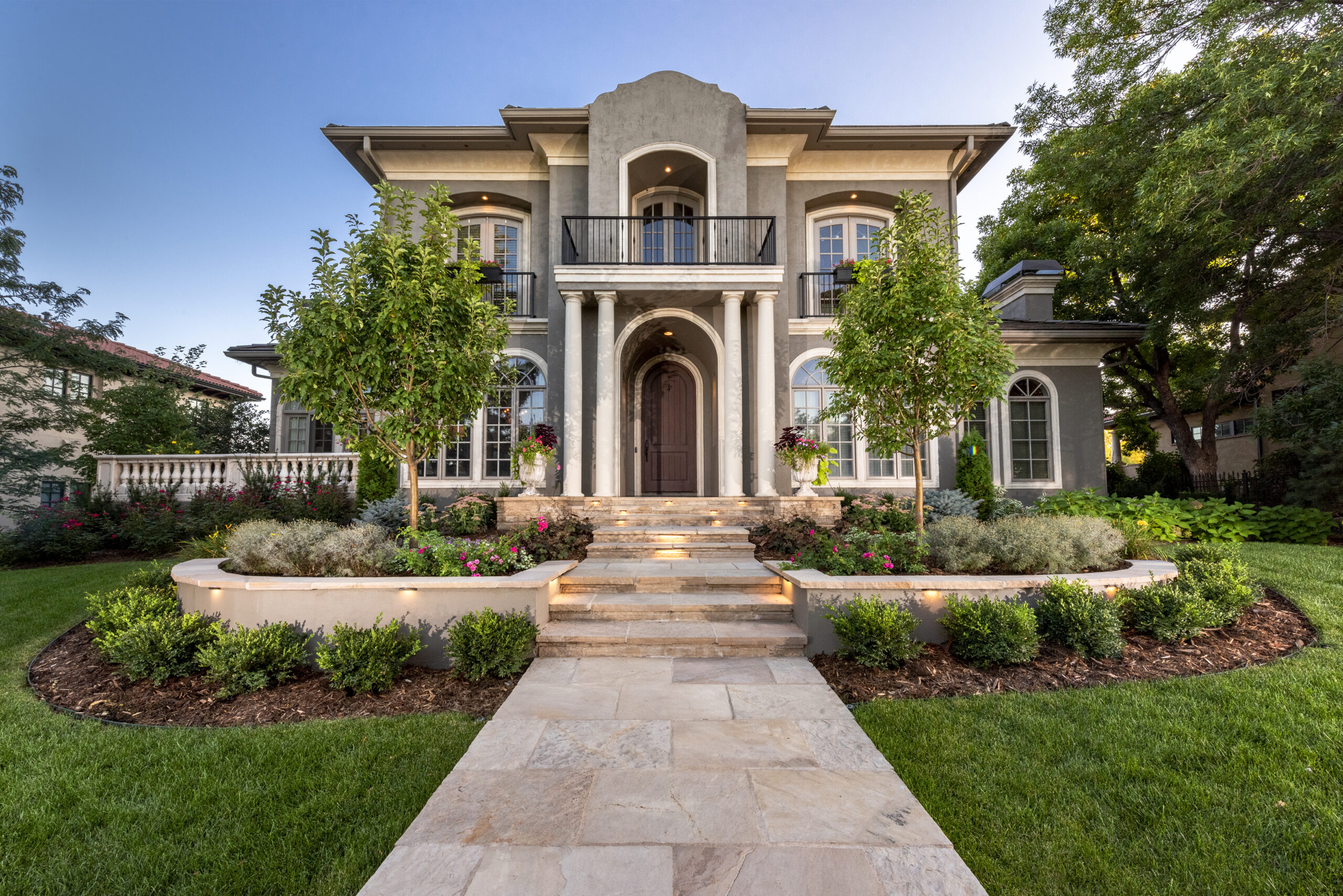
Everything this article has covered points toward the same conclusion: the projects that turn out best are the ones where every element was considered together from the beginning.
That’s not just a design principle. It’s an operational one. When the same team that designs your front entry also manages the construction, nothing gets lost in translation. The material relationships, the drainage plan, the transition details, the proportions that were established in the design: they all carry through to the finished result because one accountable partner owns the entire process.
For homeowners in Denver researching front entry hardscape work, the question isn’t just which materials to choose or which features to include. It’s who will make sure all the decisions work together, and who will still be standing behind the result when the project is done.
When we start a front entry project at Phase One Landscapes, we’re not looking at the driveway, the walkway, and the borders as separate line items. We’re looking at the whole arrival experience and working backward from what we want a visitor to feel when they pull up to that home. That’s the starting point. Everything else follows from there. View our Project Portfolio to see samplings of our work.
If you’re thinking about your front entry and want to talk through what a cohesive design/build approach could look like for your property, we’d welcome the conversation. Request an appointment today, and a Phase One Landscapes representative will contact you. You can learn more about our entry and curb appeal services, send a message to our team through our contact form.
About Phase One Landscapes
At Phase One Landscapes, we put your goals at the center of every design. With years of hands-on experience across Colorado, a passion for creativity, and a commitment to honest, friendly service, we’d be honored to guide your landscape transformation.
Ready to bring your dream yard to life? Contact us today for a consultation—let’s start the next chapter of your outdoor story together.
We can’t wait to hear your ideas—and turn them into reality!